



National markets and tight regulations have discouraged competition and the entry of foreign players into the Latin American post-trade industry. Latin America has not been very competitive in the past, but things are starting to change.
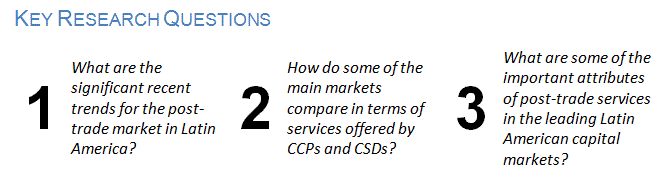
In the report Evolution of Post-Trade Landscape in Latin America: Growing in Confidence, Celent looks at the recent development of post-trade services in the region, with a focus on the providers in Brazil, Mexico, and Chile. Latin American governments and capital market regulators have struggled to increase standardization and harmonization across the various capital markets. This process is hampered by the fact that different markets within the region are at different levels of development, and there is no easy “one size fits all” solution.
However, MILA (Latin American Integrated Market) is an important step toward greater integration of the capital markets of Chile, Colombia, Mexico, and Peru. The regulators in these countries are trying to harmonize the national markets to simplify trading and post-trade infrastructure. The exchange is also providing impetus to other markets to improve their competitiveness.
Brazil continues to be the leading and most advanced capital market in the region, but Chile and Mexico have made significant strides, especially in their post-trade infrastructure. The other countries in Latin America are lagging. The level of fragmentation in the LatAm post-trade industry is low due to the domination of the national exchanges.
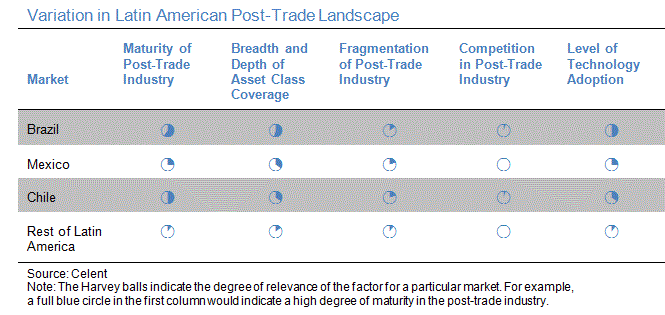
This report discusses the recent trends in the Latin American post-trade services market, and is followed by a look at recent development of the CCPs and CSDs operating in the market, including a comparison with some international counterparts. Celent concludes by considering some of the important challenges and the strategies being utilized to overcome them.
“Post-trade infrastructure providers are usually slower at adapting and modernizing their technology,” says Dr. Anshuman Jaswal, a senior analyst with Celent’s Securities & Investments practice and author of the report. “However, the recent regulatory push to improve market infrastructure means that there has been a flurry of activity seen among CCPs especially but also among CSDs.”