

Cracking the Trillion Dollar Collateral Optimization Question
Defining Principles, Strategic Planning, and Technology
Abstract
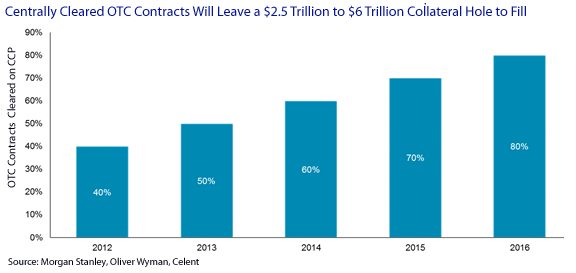
An estimated 40-50% of OTC contracts are expected to be cleared by the end of 2013, leaving a $2.5 trillion collateral hole to fill. This will drive firms to optimize their internal inventory while simultaneously engaging with custodians, dealers, and settlement houses offering collateral transformation services.
As we move towards a scenario in which central clearing of standardized OTC derivatives becomes more widespread in markets across the globe, there is one question on the lips of many practitioners: Where is all this collateral going to come from? In the report Cracking the Trillion Dollar Collateral Optimization Question, Celent examines the strategies, approaches, and technologies that firms are employing to address the question of how to plan and execute collateral optimization activities.
Many organizations, including custodians, dealers, and settlement houses, are looking to offer collateral transformation or collateral upgrade services to their clients. However, these external service providers cannot process unlimited amounts of collateral transformation. Instead, these firms will have to ensure that they are optimizing their assets against their own requirements while ensuring that they have the infrastructure in place to support optimization service offerings to their clients via clearing services.
“Collateral optimization activities are evolving towards a front office focus, where front line trading decisions take into account a more cohesive strategy for ranking collateral,” says Medy Agami, Analyst with Celent’s Securities & Investments Group and coauthor of the report. “In the long run, a strategic approach to collateral optimization needs to take into account the optimization of both risk and capital in order to achieve an overall payoff.”
“The degree of sophistication in collateral optimization will be contingent not only on what one can achieve with smart analytics, but also on the connectedness and timely delivery of the broader information ecosystem. Financial firms should execute delivery in this area in close tandem with other risk and regulatory reform initiatives,” adds Cubillas Ding, Research Director, with Celent’s Securities & Investments Group and coauthor of the report. “For most firms, the journey has begun, but there is still a long road ahead.”
This report provides analysis to support the development blueprint for collateral optimization processes. This is followed by a discussion around what collateral optimization challenges the market faces today, how firms are dealing with these challenges, and emerging technology solutions in the market. The report concludes by providing insights and a framework for the future direction of collateral optimization activities.
This 19-page report contains five figures and one table.